Table Of Content

Other studies show that people with higher levels of reported stress are more likely to have gray hair. And research also shows that stress can speed up your body’s natural aging processes, including changes in hair color. These studies don’t show a direct cause-and-effect relationship. But they further support the link between stress and gray hair.

Healthy Aging
Researchers found that under acute stress, hair in mice turns gray because an overactive sympathetic nervous system (“fight or flight”) can lead to the rapid depletion of melanocyte stem cells, the cells involved in creating pigment. According to researchers, stress causes the stress hormone norepinephrine to release into hair follicles. This caused a noticeable loss of melanocyte stem cells in mice. The mitochondria connection between stress and hair color differs from that discovered in a recent study of mice, which found that stress-induced graying was caused by an irreversible loss of stem cells in the hair follicle.
How to keep your cells young:
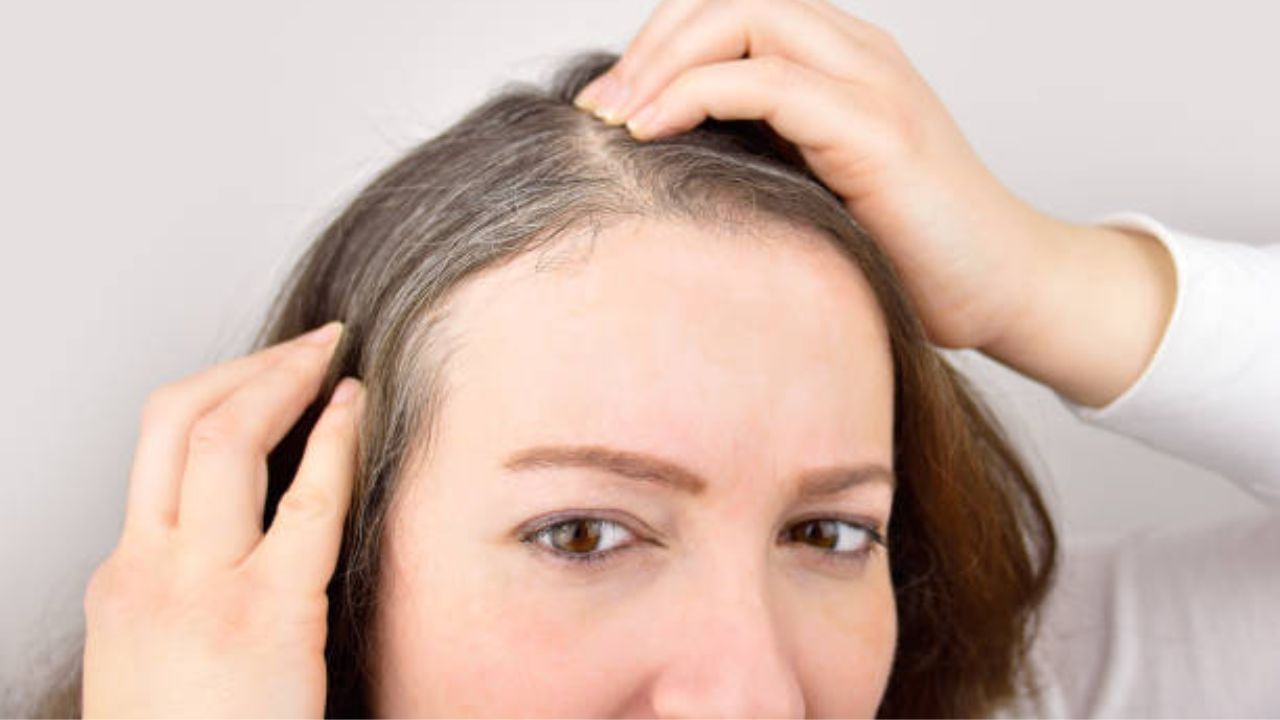
Happily, “this type of hair loss is not permanent and generally resolves on its own within one to three months,” she says. Hill explains that the gray coloring of a hair fiber is a result of some melanocyte activity (the cells that produce melanin), and the white coloring of a hair fiber is the complete absence of all melanin and melanocyte activity. As we age, hair follicles naturally begin to produce less melanin.
Tips for Preventing Premature Grey Hair
Reverse graying is also more common in patients being treated for a hair loss condition, rather than people who are graying normally, he said. There's a long-held belief that graying hair is more than just an issue of time and age — it's a marker of lived experience. The adage, "you're making my hair gray" suggests silvering strands are a record of worries, while Marie Antoinette's hair went white in a single night after learning of her execution, according to legend. Hair pigmentation patterns of 100 hairs from a male and female study participant.

Grey hair might be reversible — if you catch it in time - CBC.ca
Grey hair might be reversible — if you catch it in time.
Posted: Wed, 28 Feb 2024 08:00:00 GMT [source]
"Mitochondria are actually like little antennas inside the cell that respond to a number of different signals, including psychological stress." "There was one individual who went on vacation, and five hairs on that person's head reverted back to dark during the vacation, synchronized in time," Picard says. Senior author Ya-Chieh Hsu shows off a diagram of a hair follicle — complete with a helpful test mouse.
How Stress Can Affect Hair Loss And What To Do About It
With fewer stem cells to turn into pigment cells or melanocytes, less melanin can be produced. Researchers found that the norepinephrine from sympathetic nerves causes the stem cells to activate excessively. The stem cells all convert into pigment-producing cells, prematurely depleting the reservoir. Using florescent labelling, the researchers observed the stem cells change to melanocytes and migrate away from their reserve in the hair follicle. With no remaining stem cells, no new pigment cells can be made, and any new hair becomes gray, then white. In the hair follicle, certain stem cells act as a reservoir of pigment-producing cells.
We often think that stress may also play a role, but until recently, that hadn't actually been demonstrated in humans; a 2021 study finally brought some evidence to the table. Some people start seeing gray hairs in their 20s; others in their 50s, so that window of opportunity will vary. Hair needs to reach a threshold before it turns gray, Picard said.
What lifestyle changes can help me avoid prostate cancer?
Your hair color is determined by pigment-producing cells called melanocytes. New melanocytes are made from melanocyte stem cells that live in the hair follicle at the base of your hair strand. The research team, led by Dr. Ya-Chieh Hsu of Harvard University, used mice to examine stress and hair graying.
"Understanding the mechanisms that allow 'old' gray hairs to return to their 'young' pigmented states could yield new clues about the malleability of human aging in general and how it is influenced by stress," Picard says. They also note the need for more research to understand interactions between the nervous system and stem cells in different tissues and organs. This will aid future research on the impact of stress on the body and the development of new treatments.
If strands are about to go gray anyway — perhaps near middle age — a stressful event might push hair cells past that threshold earlier, the study noted. Then when the stress ends and the hair is just above the threshold, it could revert back to dark. "What we do has a material impact on things we used to think were irreversible like hair graying," Picard said. In practice, Kingsley said he doesn't often see hair recover its pigment.
But stress isn’t the only — or even the primary — reason that most people get gray hair. Harvard’s Office of Technology Development has filed a provisional patent application on the lab’s findings and is engaging prospective commercial partners who may be interested in clinical and cosmetic applications. Ideally, a follow-up prospective study would be next, Picard said. Researchers would follow participants for months, recording their experiences and measuring their stress hormones via saliva before analyzing their hair strands. Even indirect stress, such as malnutrition, thyroid issues, hormonal imbalance and anemia, may impact hair pigmentation, he said.
It’s possible these exposures trigger changes in hair pigmentation. Research shows that chronic stress can decrease stem cells that produce pigment of color in your hair. Although reducing your stress levels might seem insurmountable, making sure you’re eating the right things will go a long way to setting a good foundation for optimum hair growth. A healthy balanced diet is also important in stress reduction too as it can support a healthy immune system, repair damaged cells and even reduce elevated cortisol levels.
History is replete with anecdotes, more and less verified, of individuals whose hair turned white or gray due to stress. Reducing stress in your life is a good goal, but it won’t necessarily turn your hair to a normal color. The results were compared with each volunteer’s stress diary, in which individuals were asked to review their calendars and rate each week’s level of stress. The new Harvard research is only a mouse study, so replicating the same results in a human study would be necessary to strengthen the findings. It’s an important bodily function, but the long-term presence of heightened cortisol is linked to a host of negative health outcomes. Marie Antoinette’s hair was said to have turned the color of snow overnight while she awaited the guillotine during the French Revolution.
The investigators immediately noticed that some gray hairs naturally regain their original color, which had never been quantitatively documented, Picard says. However, mice without adrenal glands still showed stress-related graying. Noradrenaline is also the main neurotransmitter of the sympathetic nervous system, which is responsible for the “fight-or-flight” reaction in response to stress.
And some degree of oxidative stress is a natural part of life. Reducing stress in your life is a good goal, but it won't necessarily turn your hair to a normal color. The results were compared with each volunteer's stress diary, in which individuals were asked to review their calendars and rate each week's level of stress.
It's fueled by dihydrotestosterone, a byproduct of the male hormone testosterone. In female-pattern baldness, the hair loss is different – it thins throughout the top of the scalp, leaving the hair in front intact. Some people consider gray hair as something that makes them look distinguished; for others, it's a reminder that they're getting older. However you feel about it, gray or white hair is pretty much inevitable with age (if you're fortunate enough to still have hair in your later years). In short, yes, stress can turn your hair gray — but not in the way you might think. Whether you're dealing with acute stress, chronic stress, or even psychological stress, there's a chance that it can be the cause of your graying hair.



No comments:
Post a Comment